Monday, December 16, 2013

Faces of FreeBSD - Shteryana Shopova

FACES OF FREEBSD

Each week we are sharing a story from someone involved in FreeBSD. This is our Faces of FreeBSD series. It may be a story from someone who’s received funding from us to work on development projects, run conferences, travel to conferences, or advocate for FreeBSD. Or, it may be from someone who gives back to FreeBSD financially or in another way. But, it is always from someone who is making a positive difference in the FreeBSD world.

Here’s a chance to get to know your fellow FreeBSD enthusiast. Sit back and enjoy another 2013 Faces of FreeBSD story.

Shteryana's Story


My name is Shteryana Shopova. I am 31 years old and live in Sofia, the capital of a small East European country called Bulgaria. I have a Bachelor’s degree in Computer Science from the University of Sofia and am finishing a Master’s degree in Computer and Network Security there. I was a guest lecturer at the Network Security course at my Alma Mater this semester, which, along with organizing EuroBSDCon 2014, is one of the biggest challenges I am facing in the next several months.

Away from computers, I enjoy the company of my family and friends, a glass of good wine, and outdoor sports.  I was on my school's female basketball team for a few years, and I still enjoy playing the game (I’m good at it). I learned to ski as a kid and I’m happy to be back on the ski slopes in Europe after suffering a serious ankle injury a couple of years ago. I am praying for lots of snow this winter.

My first exposure to FreeBSD was in 2004 when I was working for a company producing network devices. The OS that we developed and ran on the devices was based on WindRiver's vxWorks, with a TCP/IP stack derived from the very early ones from FreeBSD/NetBSD.  I often found myself looking at the projects' CVS repositories for solutions of problems that I encountered at work. In 2005, I did the Google Summer of Code program for FreeBSD, coding the client side of the SNMP protocol. Since all FreeBSD development has to happen on FreeBSD-current, I installed FreeBSD on my laptop—alongside the Windows and Slackware Linux I was running on it at the time. Several months later I realized that apart from FreeBSD, I hadn't booted the other two operating systems in months. So I wiped them out.

I try to help the FreeBSD Project any way I can. I am maintaining the native SNMP daemon and client code, doing bugfixes in networking related parts, testing the OS a lot by following the HEAD (a.k.a FreeBSD-CURRENT), and trying out new stuff that gets added there. The last couple of years I had to put off most of the technical work I do for FreeBSD in favor of finishing my formal education. Nevertheless, I continue to help by advocating for FreeBSD. I've given
FreeBSD-related talks on several occasions, organized a BSD-dedicated track at OpenFest (the largest local OpenSource conference), and proctored BSDCG certification exams (the equivalent of LPIs for BSD system administrators). I am also on the board of the EuroBSDCon Foundation in the role of the EuroBSDCon 2014 Organizing Committee Chair.

Why FreeBSD? I think it’s the only OS that so nicely fits all my needs. I appreciate the modern and easy-to-administer filesystem—ZFS, plenty of virtualization options including bhyve, the fast and modern networking stack, plenty of third party software via the ports and packages, and more. I value the extensive and good documentation, and the high quality and liberally licensed source code (so I can experiment, make modifications, or fix problems myself without having to wait for upstream patches, or even sell it without any legal concerns). Finally, by interacting with the FreeBSD community and developers—the entire BSD community in fact—I've learned so much and continue to learn. I think it has shaped me as the professional I am today, and I am very thankful for that.

I think the FreeBSD Foundation is doing a great job of supporting the project. As a developer, the most important activities of the Foundation are funding developers to work on various projects, sponsoring FreeBSD-related technical events, and giving travel grants to developers so that we have a chance to meet physically and discuss ideas, projects, and problems. A couple of years ago I added SNMPv3 authentication, encryption, and access control to bsnmpd(1), along with a module for monitoring wireless interfaces. People had asked for those additions for some time; I doubt I would have had the time and resources to implement them if the Foundation hadn't sponsored me.

I want to appeal to everyone: if you like FreeBSD, please consider a donation to the FreeBSD Foundation, so we can make FreeBSD even better. And I hope to see you at EuroBSDCon next year in Sofia!


Shteryana Shopova


Donate today to help us continue and increase our support of the FreeBSD Project and community worldwide! Making a donation is quick and easy. To make a donation go to: http://www.freebsdfoundation.org/donate/

Monday, December 9, 2013

FreeBSD 10.0-RC1 Now Available

The first RC build of the FreeBSD 10.0-RELEASE cycle is now available.

Please refer to the announcement email for the image checksums.

Please see the change list for an important note regarding the bsdinstall(8) ZFS on GELI option.

ISO images and, for architectures that support it, the memory stick images are available here.

If you notice problems you can report them through the normal GNATS PR system or here on the -current or -stable mailing lists.

Important note to freebsd-update(8) users:  Please be sure to follow the instructions in the following FreeBSD Errata Notices before upgrading the system to 10.0-RC1:


Changes between -BETA4 and -RC1 include:

  • Fix to a regression in bsdinstall(8) that prevents ZFS on GELI installation from working correctly.
    • Please note: a last-minute problem was found in 10.0-RC1 testing with this installation option that is still being investigated.  Please do not select the GELI encryption option from the installer.  Although the installation successfully completes, the GELI passphrase will not decrypt the GELI provider.
  • Build Hyper-V kernel modules by default for i386.
  • Update oce(4) driver to support 40Gbps devices.
  • Improve robustness of the Xen balloon driver.
  • Fix accounting for hw.realmem on the i386 and amd64 platforms.
  • Fix poweroff(8) on XenServer.
  • Fix powerd/states on AMD cpus.
  • Add support for BCM57764, BCM57767, BCM57782, BCM57786 and BCM57787.
  • Fix PKG_ABI detection in bsdconfig(8) after pkg-1.2.
  • Fix emulated jail_v0 byte order.
  • Fix hang on reboot with active iSCSI connections.
  • Fix a potential system crash if a jail(8) is created and destroyed on systems with VIMAGE.

Faces of FreeBSD - Brooks Davis

FACES OF FREEBSD

Each week we are sharing a story from someone involved in FreeBSD. This is our Faces of FreeBSD series. It may be a story from someone who’s received funding from us to work on development projects, run conferences, travel to conferences, or advocate for FreeBSD. Or, it may be from someone who gives back to FreeBSD financially or in another way. But, it is always from someone who is making a positive difference in the FreeBSD world.

Here’s a chance to get to know your fellow FreeBSD enthusiast. Sit back and enjoy another 2013 Faces of FreeBSD story.

Brooks' Story


I’m a Senior Software Engineer for SRI International, working on multiple clean slate research projects using FreeBSD as the operating system for research on the hardware-software interface.  A  FreeBSD committer since 2001 and core team member from 2006 through 2012, I've built an HPC cluster based on FreeBSD, implemented an internal source code sharing system with FreeBSD and Trac, and most recently helped port FreeBSD to an open source CPU to enable architecture, systems, and security research.  I've also helped drive our transition from a GNU toolchain to a more modern LLVM based toolchain.

Outside the world of computing I’m a foodie, gardener, home brewer of beer, mead and cider, woodworker, and blacksmith.

My first exposure to FreeBSD was a floppy disk-based SLIP router installed in my high school in 1993/4 by a local FreeBSD-based ISP.  Distracted as a Solaris admin during college, I returned to FreeBSD almost immediately after graduation when FreeBSD made it trivial to set up a PPP router at home.  The Aerospace Corporation, my first post-college job, involved working with FreeBSD due to our extensive use of dummynet in our research labs.  Over the next decade-plus I spread FreeBSD from the lab to the largest computing cluster at the company and to an internal sourceforge.net-like system hosting over 350 projects.

Now I work to make FreeBSD better, such as working on toolchain and build system issues with a focus on medium to large embedded systems.  Our research group developed an open source CPU based on the 64-bit MIPS ISA that we use to explore the hardware-software interface.  I maintained Clang and LLVM ports, enhanced the FreeBSD build and release system to work without root permissions, and wrote and modified device drivers for our platform. I also maintained a number of high performance computing related ports including Sun Grid Engine and Ganglia as well as a number of Trac modules.  

One of the reasons I like FreeBSD is the community involved in the process of building a principled, technically-advanced operating system platform. Not only do we produce a great product, but we have fun doing it.

I appreciate how the FreeBSD Foundation has helped me both directly and indirectly to attend conferences, developer’s meetings, vendor summits, and events like Google Summer of Code mentors summits.  I’ve received travel grants for a number of these events and the FreeBSD Foundation sponsors many BSD conferences where I have presented, including AsiaBSDCon, BSDCan, EuroBSDCon, and BSDDay Argentina.

Donating to the FreeBSD Foundation is an easy way to support FreeBSD. Even the smallest donation helps as your mere presence as a donator demonstrates community support. I'm excited by the early results of the FreeBSD Foundation’s recent expansion of staff and look forward to continued growth.  I donate every year.

Brooks Davis


Donate today to help us continue and increase our support of the FreeBSD Project and community worldwide! Making a donation is quick and easy. To make a donation go to: http://www.freebsdfoundation.org/donate/


Tuesday, December 3, 2013

FreeBSD 10.0-BETA4 now available

The fourth BETA build of the 10.0-RELEASE release cycle is now available on the FTP servers for the amd64, i386, ia64, powerpc, powerpc64 and sparc64 architectures.

This is expected to be the final BETA build of the 10.0-RELEASE cycle.

Checksums for the installation images are available in the announcement email.

If you notice problems you can report them through the PR system or on the -current mailing list.

If you would like to use SVN to do a source based update of an existing system, use the "stable/10" branch.

Important note to freebsd-update(8) users:  Please be sure to follow the instructions in the following FreeBSD Errata Notices before upgrading the system to 10.0-BETA4:

  • http://www.freebsd.org/security/advisories/FreeBSD-EN-13:04.freebsd-update.asc
  • http://www.freebsd.org/security/advisories/FreeBSD-EN-13:05.freebsd-update.asc

Changes between -BETA3 and -BETA4 include:

  • Add preliminary support for RTL8106E, RTL8168G, RTL8168GU, RTL8411B, and RTL8168EP.
  • Enable fingerprint checking in pkg(8) for FreeBSD-provided binary packages.
  • Remove the WITH_LIBICONV_COMPAT build option.
  • Update nvi to 2.1.2.
  • Various iconv(3) fixes.
  • Fix mergemaster -U by forcing FreeBSD 9 compatiblity in mtree when mtree is nmtree.
  • Fix to freebsd-update(8) in generating the list of old files/directories versus new files/directories (FreeBSD-EN-13:05.freebsd-update).

Pre-installed virtual machine images for 10.0-BETA4 are also available for amd64 and i386 architectures.

Monday, December 2, 2013

Faces of FreeBSD - Reid Linnemann

FACES OF FREEBSD

Each week we are sharing a story from someone involved in FreeBSD. This is our Faces of FreeBSD series. It may be a story from someone who’s received funding from us to work on development projects, run conferences, travel to conferences, or advocate for FreeBSD. But, it is always from someone who is making a positive difference in the FreeBSD world.

Here’s a chance to get to know your fellow FreeBSD enthusiast. Sit back and enjoy another 2013 Faces of FreeBSD story.

Reid's Story


My name is Reid Linnemann. I am 32 years old and work at Spectra Logic Corporation (Boulder, CO). I grew up in Edmond, Oklahoma, graduating from Oklahoma State University with a BS in Computer Science in 2004.

I worked at the Oklahoma Department of Career and Technology Education (Stillwater, OK) developing Zope and Plone applications interfacing with SQL databases and single sign-on services, and CymSTAR, LLC (Broken Arrow, OK) developing and modifying real-time simulation software and implementing DIS for virtual air refueling simulation. I was part of the team that designed and built CymSTAR's  KC-135 BOWST trainer for the Mobility Air Force, and contributed to the development of MAF DMO virtual air refueling standards.

I am a versed C and Python programmer, with a good bit of Java, Perl, Ruby, C++, and other various and sundry languages under my belt. I’m interested in 8 bit AVR microcontrollers in my free time.

I was first introduced to FreeBSD in 1999 when a particular greybeard (the senior technician for my shift at a local ISP) played XBill on an X server in WindowMaker. He said it ran on his FreeBSD machine at home across a dedicated 64k subscriber line, displayed in a little window on his workstation. I was astounded, quickly taken in by the FreeBSD users on my shift, and spent a bleary-eyed overnight session with a pair of coworkers who helped me run FreeBSD 3.4 on my own computer.

FreeBSD was remarkable, available at no cost and developed by a group of people scattered across the globe. Its historical lineage to BSD, design philosophy, and professional community stood out. I could examine the source code, and read reams of manual pages documenting every program, libc function, and configuration file if I wanted.

I used the system to build and install ports, and explored, getting actively involved in the mailing lists and forums, studying, passing on my own limited knowledge to those who could benefit from it. I pursued my career in the open source software world, learning the differences in BSD and GNU licensing and the fragmented nature of Linux distributions, realizing the FreeBSD community was more mature and well distributed about industry, education, and research. Everything steered me towards working with and on FreeBSD.

I decided to work for FreeBSD in a professional capacity by the time I was 30, and so here I am, at Spectra Logic, fulfilling that goal. I am part of a team developing a product that will be powered by FreeBSD. Now I find myself in the midst of several prominent FreeBSD developers, the most professional and disciplined software engineers I’ve met, and look forward to learning from them, contributing to FreeBSD, and becoming more involved in the project. Perhaps you'll see me one day at BSDCan or EuroBSDCon. I hope so.

Reid Linnemann

Donate today to help us continue and increase our support of the FreeBSD Project and community worldwide! Making a donation is quick and easy. To make a donation go to: http://www.freebsdfoundation.org/donate/
Monday, November 25, 2013

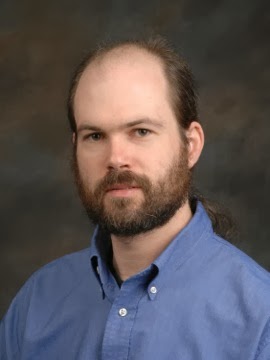
Faces of FreeBSD - Gabor Pali

Faces of FreeBSD

Each week we are going to share a story from someone involved in FreeBSD. This is our Faces of FreeBSD series. It may be a story from someone who’s received funding from us to work on development projects, run conferences, travel to conferences, or advocate for FreeBSD. Or, it may be from someone who contributes financially to the foundation.

Here’s a chance to get to know your fellow FreeBSD enthusiast. Sit back and enjoy another 2013 Faces of FreeBSD story.

Gábor’s Story


My name is Gábor Páli, I am 31 years old, from Hungary, and I teach (and study) functional programming at the Eötvös Loránd University, Faculty of Informatics (Budapest).  I have a master’s degree (Debrecen, Hungary) and a doctorate (Cluj-Napoca, Romania) in Computer Science.

Before this I was a game engine programmer at Invictus Games, working on Project Torque (known as Level-R outside North America), then a research intern at Chalmers University of Technology (Gothenburg, Sweden), and recently at the Computer Laboratory (Cambridge, UK), participating in research projects on functional programming and operating systems, such as Feldspar and Mirage.

When not working, I am an average geek who enjoys reading books on science, philosophy, and art, chatting with friends, playing good old computer games, watching art movies, drawing, listening to underground music, and consuming excessive amounts of fine Japanese or Chinese teas.

I discovered FreeBSD in 2000 while working on my master’s. I met János Háber, who admired the technical merits of FreeBSD and recommended it over the popular and widespread GNU/Linux distributions. I downloaded FreeBSD 4.3-RELEASE, found it reliable, consistent, easy to install, update and use. I especially liked the Ports Collection, as it helped me find further useful and valuable free software.

I’ve contributed to the FreeBSD Project since 2008: I translated the complete FreeBSD Handbook and other documentation into Hungarian and took over and revitalized the FreeBSD stack of the Haskell programming language, including making FreeBSD Tier-1 for the Glasgow Haskell Compiler and providing ports for hundreds of third party Haskell libraries. 

I volunteered to take over organization of the EuroBSDcon FreeBSD Developer Summits in 2010 and have organized in Karlsruhe (Germany), Maarssen (Netherlands), Warsaw (Poland) and most recently in St. Julian's (Malta).  I’ve run a mini version of EuroBSDcon, called BSD-Day, in Budapest (Hungary), Bratislava (Slovakia), Vienna (Austria), and Naples (Italy).

I’m secretary of the FreeBSD Core Team (since 2012), and maintain the agenda, organize meetings, publish internal, external reports and notices, handle commit bit requests for the source code repository, collaborate with the FreeBSD Foundation, and remind the Core Team members about their pending tasks. I also manage the quarterly status reports.

I like FreeBSD because of the community, and the ability to find and push my limits. I enjoy contributing to FreeBSD because it inspires me and gives me hands-on experience that can’t be bought. I enjoy learning from FreeBSD experts around the globe, and am impressed with what has been achieved over the years. I recognize the outstanding stability and reliability of FreeBSD, the ability to configure systems to maximize efficiency, and FreeBSD’s use as a research platform. I appreciate how the FreeBSD Project welcomes and utilizes innovative ideas.

The FreeBSD Foundation gave me a travel grant for EuroBSDcon 2012. They were a main sponsor of the BSD-Day events, and covered half the cost of the Developer Summit in Malta. I am very grateful for this support, as they would not be possible without the generous funds.

The Developer Summits allow developers the space to personally meet and to discuss issues they could not over the Internet. It’s important to be able to attach a face to an Internet personality; sometimes the harshest, stubborn members are the nicest people in real life.

The BSD-Day events that I organize allow cities and countries to have their own BSD conference at a much smaller cost. BSD-Days have less formalities and pressure, yet they retain most of the traditions and ambience of the large conferences of EuroBSDcon, on a smaller budget.

Donating to the FreeBSD Foundation is a great way to express your appreciation for the work of the FreeBSD Project.  Your donation makes it possible for developers to dedicate their time to complete long-awaited projects, or brings developers from overseas to technical conferences such as EuroBSDcon. This is something that would not happen without your support.

Gábor Páli

Donate today to help us continue and increase our support of the FreeBSD Project and community worldwide! Making a donation is quick and easy. To make a donation go to: http://www.freebsdfoundation.org/donate/

Friday, November 22, 2013

vBSDCon Trip Report: John-Mark Gurney

The first trip report from vBSDCon is from John-Mark Gurney:

Thank you for the opportunity to go to vBSDcon.  vBSDcon was a great conference, and I was immediately and warmly welcomed by the host, Verisign, when I arrived.  They ran an exceptional conference and I hope this becomes an annual event.

One of the main reasons I attended the conference was to be able to meet FreeBSD developers I haven't seen for years and to meet new FreeBSD developers.  For the first time, I met Luigi Rizzo who I worked with over 15 years ago on FreeBSD's sound system and ISA UPnP code.  It was good to meet him and talk about some of his netmap work.

I also met some long time developers, Scott Long and George Neville-Neil, but I also met some that I haven't met before such as Adrian Chadd, David Chisnall (theraven), Ed Maste, Randall Stewart (rrs) and Baptiste Daroussin (bapt).  There are many more that I am forgetting, but that's simply because the conference was well attended.

I participated in the embedded BOF.  It was well attended and Adrian Chadd was the leader.  One of the issues that came up was the issue of how to make ARM and/or MIPS platforms Tier 1.  It was discussed how relevant the requirement that a new Tier 1 platform must be able to cross-build packages from an existing Tier 1 platform.  There was also discussions on which ARM board should be chosen was a reference platform.  The ones that were discussed as most viable were the BeagleBone Black, Raspberry Pi, a ChromeBook or a PandaBoard.

I attended the talk that Verisign gave on how they use FreeBSD to host the .net and .com domains.  It was impressive what they are able to do with netmap for UDP traffic, but they are also running issues w/ TCP connection performance on FreeBSD due to some lock scaling issues.

The hallway track is always interesting, and I was able to talk with David Chisnall about ways to possibly support changing functions at kernel load time to choose the best implementation.  One use of this would be to choose which AES implementation is best for the machine. If the machine has support for native AES instructions (AES-NI for example) it would use that, otherwise it could fall back to a software implementation.

Though unfortunately the hallway track made me miss Brad Davis's Speed Geeking talk on GELI, but it did allow me to spend time talking with Matt Olander, co-founder of iXsystems, Inc.  It was interesting to learn about the history of iX and find out about where they are interested in going with FreeBSD.  I may be able to help them with some work on FreeBSD in the future.

I attended the talk that Henning Brauer and Reyk Floeter gave on pf in OpenBSD.  The new features that pf has are very interesting and exciting. The features make possible reverse HTTP proxies and other packet steering techniques very easy to do.  I do wonder if using DXR for the table lookups that pf/ipfw do could be helpful, though the rule scanning overhead is still probably the largest overhead.

In summary, the conference was great and I was able to meet a large number of people and get some great ideas on how to help move FreeBSD forward.

Thank you again FreeBSD Foundation for providing me with the travel grant.